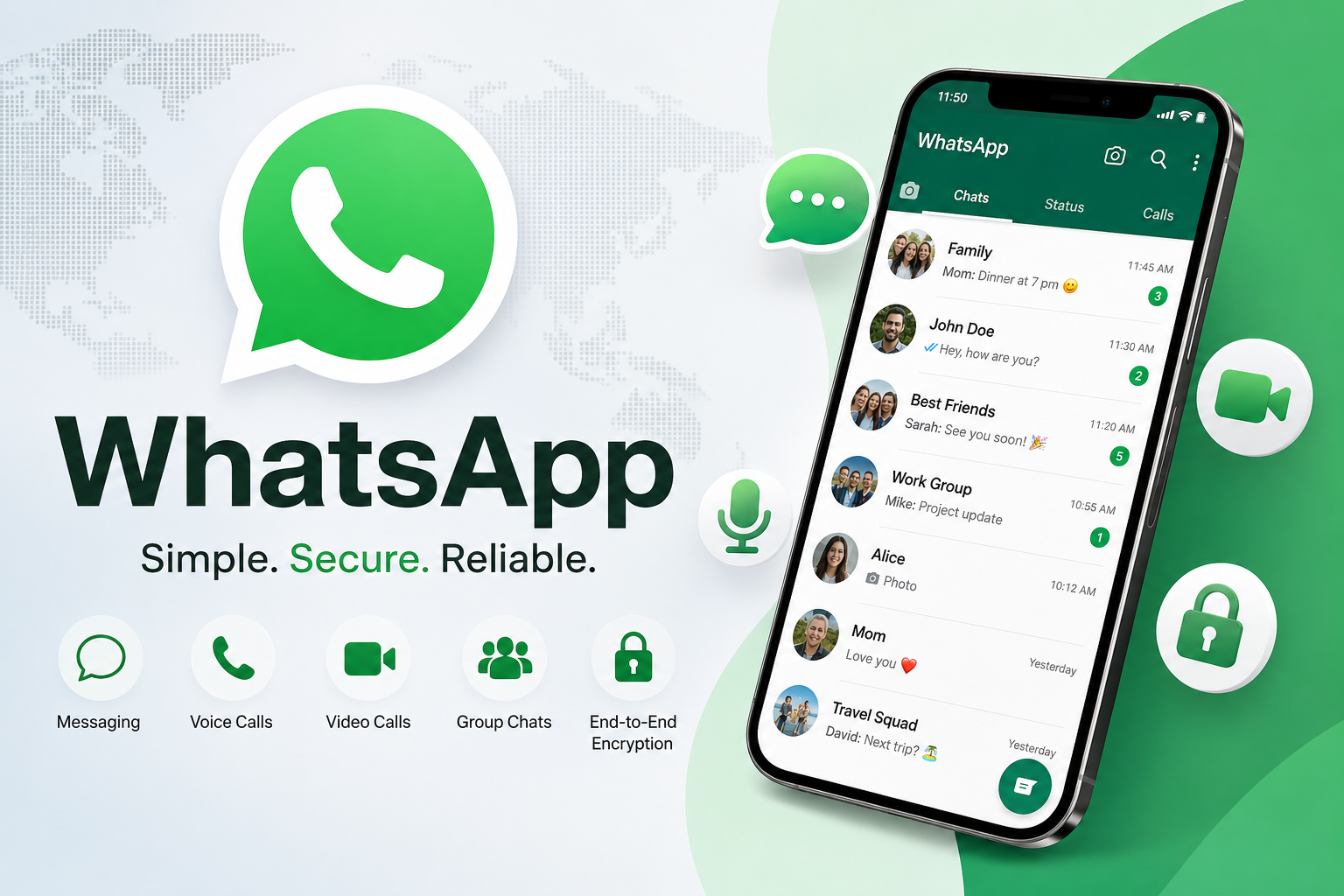
WhatsApp Guide: Features, Uses & Key Facts
Introduction
WhatsApp has become one of the most widely used communication platforms in the world, connecting billions of people daily. Whether for personal chats, business communication, or international calls, WhatsApp offers a simple and reliable way to stay in touch. Its ease of use, combined with powerful features like end-to-end encryption and multimedia sharing, makes it essential in modern digital life.
In this article, you’ll learn what WhatsApp is, how it works, its key features, history, benefits, and how it continues to shape global communication.
What Is WhatsApp?
WhatsApp is a free messaging application that allows users to send text messages, make voice and video calls, and share media over the internet using smartphones or computers. It uses internet data instead of traditional SMS services, making it cost-effective and globally accessible.
The History of WhatsApp
Founding and Early Growth
WhatsApp was founded in 2009 by Brian Acton and Jan Koum, former employees of Yahoo. Initially designed as a simple status-sharing app, it quickly evolved into a full messaging platform as users began using it to communicate.
Acquisition by Meta
In 2014, Facebook (now Meta) acquired WhatsApp for approximately $19 billion. This marked a major turning point, allowing the platform to scale globally and integrate advanced features.
Global Expansion
Over the years, WhatsApp expanded rapidly, reaching over 2 billion users worldwide. Its popularity grew especially in regions like South Asia, Europe, and Latin America due to its affordability and reliability.
Key Features of WhatsApp
1. Instant Messaging
WhatsApp allows users to send real-time text messages instantly. Messages are delivered over the internet, making communication fast and efficient.
2. Voice and Video Calls
Users can make high-quality voice and video calls to anyone globally without additional charges, as long as they have internet access.
3. End-to-End Encryption
Security is one of WhatsApp’s strongest features. All messages and calls are protected with end-to-end encryption, ensuring only the sender and receiver can access the content.
4. Multimedia Sharing
WhatsApp supports sharing:
- Photos and videos
- Documents (PDFs, Word files, etc.)
- Voice notes
- Contacts and location
5. Group Chats
Users can create group chats with multiple participants, making it ideal for families, friends, and work teams.
6. Status Updates
Similar to social media stories, WhatsApp Status allows users to share text, images, or videos that disappear after 24 hours.
How WhatsApp Works
Internet-Based Messaging
Unlike traditional SMS, WhatsApp uses internet connectivity (Wi-Fi or mobile data) to send messages. This reduces costs significantly, especially for international communication.
Phone Number Integration
WhatsApp is linked to your phone number, eliminating the need for usernames or passwords in most cases. This makes onboarding simple and quick.
Cross-Platform Availability
WhatsApp is available on:
- Android smartphones
- iPhones
- Desktop (Windows & Mac)
- Web browsers
WhatsApp for Business
WhatsApp Business App
WhatsApp offers a dedicated app for small businesses called WhatsApp Business. It allows companies to:
- Create business profiles
- Automate responses
- Showcase products
- Communicate with customers efficiently
WhatsApp Business API
Larger organizations use the WhatsApp Business API to integrate messaging into their customer service systems, enabling automated notifications and support at scale.
Benefits of Using WhatsApp
Cost-Effective Communication
Since it uses internet data, WhatsApp significantly reduces messaging and calling costs, especially for international communication.
User-Friendly Interface
Its simple design makes it accessible to people of all ages, including those with limited technical knowledge.
Global Reach
With billions of users worldwide, WhatsApp enables seamless communication across countries and cultures.
High Security
End-to-end encryption ensures privacy and protects sensitive information from unauthorized access.
Limitations of WhatsApp
Internet Dependency
WhatsApp requires an active internet connection. Without it, users cannot send or receive messages.
Data Privacy Concerns
Although messages are encrypted, concerns have been raised about metadata collection and its parent company’s data policies.
Storage Usage
Frequent sharing of media files can consume significant storage space on devices.
WhatsApp vs Other Messaging Apps
WhatsApp vs SMS
- WhatsApp uses internet data; SMS uses mobile networks
- WhatsApp supports multimedia; SMS is limited
- WhatsApp is generally cheaper for international use
WhatsApp vs Telegram
- WhatsApp focuses on simplicity and encryption
- Telegram offers larger group sizes and cloud storage
WhatsApp vs Messenger
- WhatsApp uses phone numbers
- Messenger integrates with Facebook accounts
Future of WhatsApp
WhatsApp continues to evolve with new features such as:
- Multi-device support
- Improved business tools
- Payment integration in select countries
- Enhanced privacy controls
Its focus remains on improving user experience while maintaining security and reliability.
Frequently Asked Questions (FAQ)
Q: Is WhatsApp free to use?
A: Yes, WhatsApp is completely free to download and use. However, it requires an internet connection, so data charges may apply depending on your mobile plan or Wi-Fi usage.
Q: Is WhatsApp safe and secure?
A: WhatsApp uses end-to-end encryption, which means only you and the recipient can read messages or hear calls. This makes it one of the more secure messaging platforms available.
Q: Can I use WhatsApp on multiple devices?
A: Yes, WhatsApp supports multi-device functionality. You can use it on your phone, computer, and web browser simultaneously without needing your phone to stay connected.
Q: What is WhatsApp Business?
A: WhatsApp Business is a version of the app designed for small businesses. It offers tools like automated replies, business profiles, and product catalogs to help companies communicate with customers.
Q: Does WhatsApp work without a SIM card?
A: WhatsApp typically requires a phone number for registration, but once verified, it can work on devices without a SIM card as long as there is an internet connection.
Conclusion
WhatsApp has transformed the way people communicate by making messaging, calling, and sharing information faster, easier, and more affordable. From its humble beginnings to becoming a global communication giant, it continues to adapt to user needs and technological advancements.
With its powerful features, strong security, and widespread adoption, WhatsApp remains a key tool in both personal and professional communication. As digital connectivity grows, its role in everyday life is only expected to expand further.






One Comment