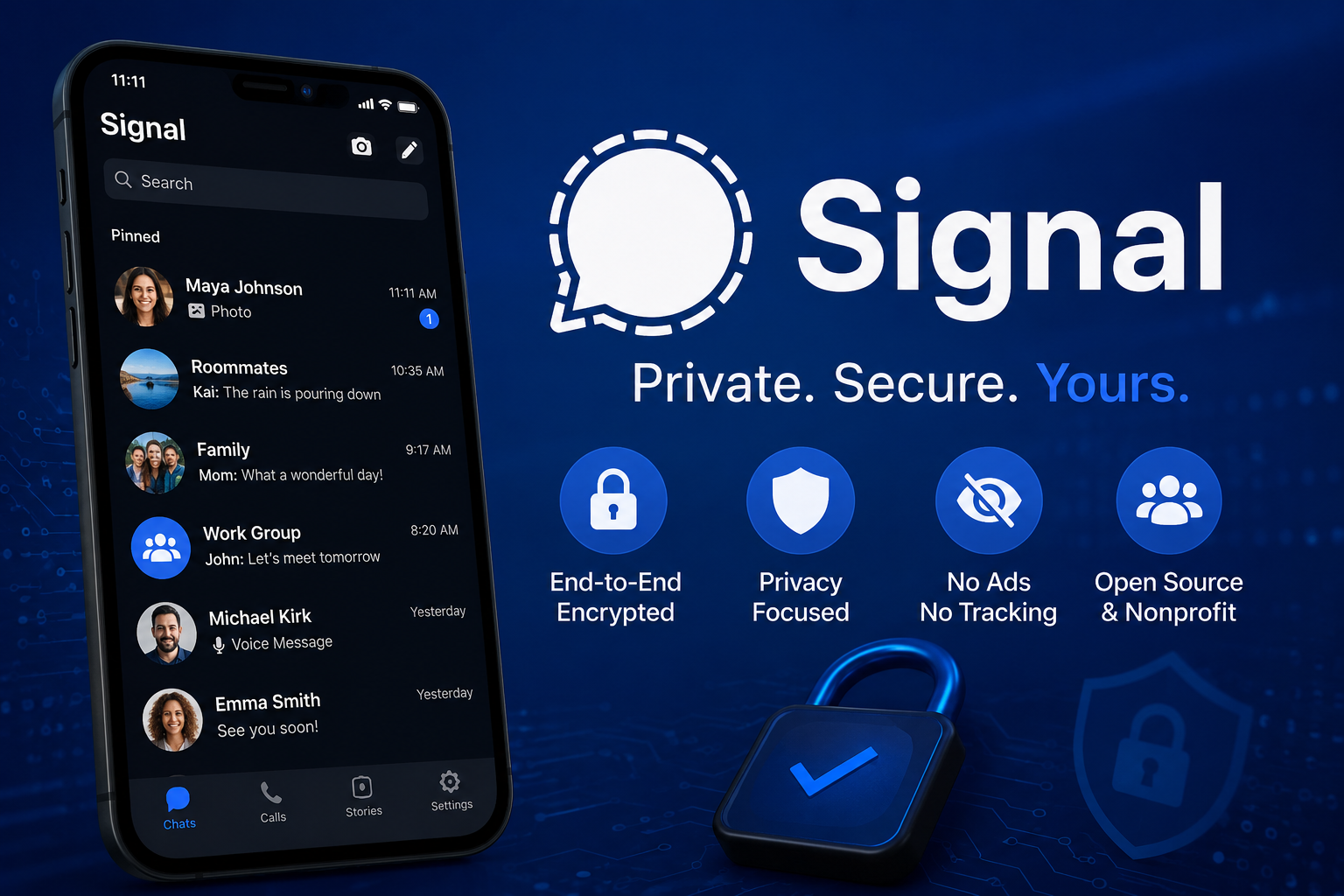
Signal App: Complete Guide to the Private Messaging Platform
Signal App: The Secure Messaging App That Puts Privacy First
In an age where digital privacy is becoming increasingly important, Signal App has established itself as one of the world’s most trusted messaging applications. Whether you’re sending personal messages, making voice calls, or sharing sensitive documents, Signal is designed to keep your conversations private through industry-leading encryption.
This guide explains what Signal is, how it works, its key features, security advantages, and why it has become the preferred messaging app for journalists, security experts, businesses, and everyday users who value privacy.
What Is Signal?
Signal App is a free, open-source messaging application that provides end-to-end encrypted text messages, voice calls, video calls, group chats, and file sharing. Developed by the nonprofit Signal Foundation, the app ensures that only the sender and recipient can read messages or listen to calls.
Unlike many messaging platforms, Signal collects minimal user data and does not use your personal conversations for advertising or profiling.
Why Signal Matters
Privacy concerns have grown significantly over the past decade as online communication has become a central part of daily life. Signal addresses these concerns by focusing on secure communication without compromising usability.
The app has gained worldwide recognition because it:
- Uses strong end-to-end encryption by default
- Collects very little user information
- Is completely free to use
- Contains no advertisements
- Is funded through donations instead of advertising revenue
- Publishes its source code for independent security reviews
These features have made Signal one of the most respected messaging platforms available today.
History of Signal
The Origins
Signal originated from secure messaging projects developed by security researcher Moxie Marlinspike. His work focused on creating communication tools that protected user privacy while remaining easy to use.
In 2018, the nonprofit Signal Foundation was established to support ongoing development. The organization received initial funding from Brian Acton, the co-founder of WhatsApp, who left Facebook to support privacy-focused technology.
Today, Signal continues to operate independently as a nonprofit organization dedicated to secure communication.
Key Features of Signal
End-to-End Encryption
Signal encrypts every message, voice call, video call, image, sticker, and file automatically.
Only the intended recipients can decrypt the information. Even Signal’s own servers cannot access message contents.
Secure Voice and Video Calls
Signal supports:
- HD voice calls
- High-quality video calls
- Group video meetings
- Screen sharing (on supported platforms)
All communications remain encrypted throughout the conversation.
Group Chats
Users can create private groups with features including:
- Group administrators
- Mentions
- Reactions
- Shared media
- Group calling
Group conversations receive the same end-to-end encryption as individual chats.
Disappearing Messages
Users may configure messages to disappear automatically after a selected period.
This feature helps reduce long-term storage of sensitive conversations.
View Once Media
Photos and videos can be sent so recipients may view them only once before they disappear.
Stories
Signal introduced Stories, allowing users to share temporary updates with selected contacts while maintaining privacy protections.
Username Support
Signal has introduced usernames that reduce the need to share your phone number with everyone you communicate with, providing an additional layer of privacy.
How Signal Protects User Privacy
Minimal Data Collection
Unlike many messaging platforms, Signal stores very little information.
Generally, Signal only requires:
- Your phone number (or account information as the platform evolves)
- The date your account was created
- The last connection timestamp
Signal does not store:
- Message contents
- Contact conversations
- Call recordings
- Advertising profiles
Open-Source Software
Signal’s applications and encryption protocols are open source.
Security researchers worldwide regularly inspect the code, helping identify vulnerabilities and ensuring transparency.
Signal Protocol
The app uses the highly respected Signal Protocol, one of the world’s most trusted encryption systems.
This protocol is also used—or has influenced encryption systems—in several other major messaging platforms.
Main Features That Make Signal Unique
Privacy by Default
Encryption is enabled automatically without requiring users to change settings.
No Advertising
Signal has no advertisements.
No Tracking
The app does not track user behavior for marketing purposes.
Cross-Platform Availability
Signal is available for:
- Android
- iPhone (iOS)
- Windows
- macOS
- Linux
Messages synchronize securely between linked devices.
High-Quality Media Sharing
Users can share:
- Photos
- Videos
- Documents
- Voice messages
- GIFs
- Contacts
- Locations
Signal vs Other Messaging Apps
| Feature | Signal | Telegram | |
|---|---|---|---|
| End-to-end encryption by default | Yes | Yes (personal chats) | No (Secret Chats only) |
| Open source | Mostly Yes | No | Partially |
| Ads | No | No | No |
| User tracking | Minimal | More metadata | More metadata |
| Nonprofit organization | Yes | No | No |
Signal’s primary advantage is its privacy-first approach and minimal data collection.
Who Uses Signal?
Signal is widely used by:
- Journalists
- Human rights organizations
- Government officials
- Business professionals
- Lawyers
- Activists
- Researchers
- Everyday users concerned about digital privacy
Its strong security reputation has made it a preferred communication platform across many industries.
Security Features
Screen Security
Signal can block screenshots on supported devices.
Registration Lock
An optional PIN helps protect your account against unauthorized registration.
Safety Numbers
Users can verify encryption keys to confirm they are communicating with the correct person.
Encrypted Backups
On supported platforms, users can securely back up conversations while maintaining privacy.
Benefits of Using Signal
Strong Privacy
Signal offers some of the strongest privacy protections available in a mainstream messaging app.
Free Forever
There are no subscription fees for standard messaging and calling.
Reliable Performance
The app supports fast messaging and high-quality calls across most internet connections.
Independent Organization
Because Signal operates as a nonprofit, its priorities focus on user privacy rather than advertising revenue.
Limitations of Signal
While Signal offers excellent privacy, users should also consider a few limitations:
- Smaller user base than some competitors
- Phone number registration remains part of the account system, although usernames help reduce sharing
- Fewer social features compared with some messaging platforms
- Cloud backups are more limited to protect privacy
These trade-offs are intentional and align with Signal’s privacy-focused philosophy.
Recent Developments
Signal continues to add features while maintaining its commitment to security and transparency. Recent updates have included improvements to usernames, Stories, enhanced group communication, performance optimizations, and ongoing security enhancements.
The development team regularly publishes updates to improve usability without weakening encryption or increasing data collection.
Frequently Asked Questions
Q: Is Signal really secure?
A: Yes. Signal is widely considered one of the most secure messaging apps available. It uses end-to-end encryption by default, stores minimal user data, and publishes its source code for independent review. Security professionals and privacy experts frequently recommend it.
Q: Is Signal free to use?
A: Yes. Signal is completely free for messaging, voice calls, video calls, and file sharing. The nonprofit Signal Foundation supports development through grants and donations rather than advertising or selling user data.
Q: Can Signal read my messages?
A: No. Signal cannot read your messages because they are protected with end-to-end encryption. Only you and the intended recipients have the keys needed to decrypt the conversation.
Q: Does Signal show advertisements?
A: No. Signal contains no advertisements and does not build advertising profiles based on user activity. Its nonprofit funding model allows it to prioritize privacy over ad revenue.
Q: Can Signal replace WhatsApp?
A: For many users, yes. Signal offers messaging, voice and video calls, group chats, disappearing messages, and media sharing. However, whether it can fully replace WhatsApp depends on whether your contacts also use Signal.
Q: Is Signal available on computers?
A: Yes. Signal offers desktop applications for Windows, macOS, and Linux. After linking a desktop device to your mobile account, you can securely send and receive messages across your devices.
Conclusion
Signal has earned its reputation as one of the most trusted private messaging platforms available today. Its combination of end-to-end encryption, open-source development, minimal data collection, and nonprofit governance sets it apart from many competitors. Whether you’re protecting sensitive business discussions, staying in touch with family, or simply valuing digital privacy, Signal provides a secure and user-friendly communication experience. As concerns about online privacy continue to grow, Signal remains a leading choice for anyone seeking confidential, reliable, and transparent messaging without sacrificing everyday convenience.

One Comment