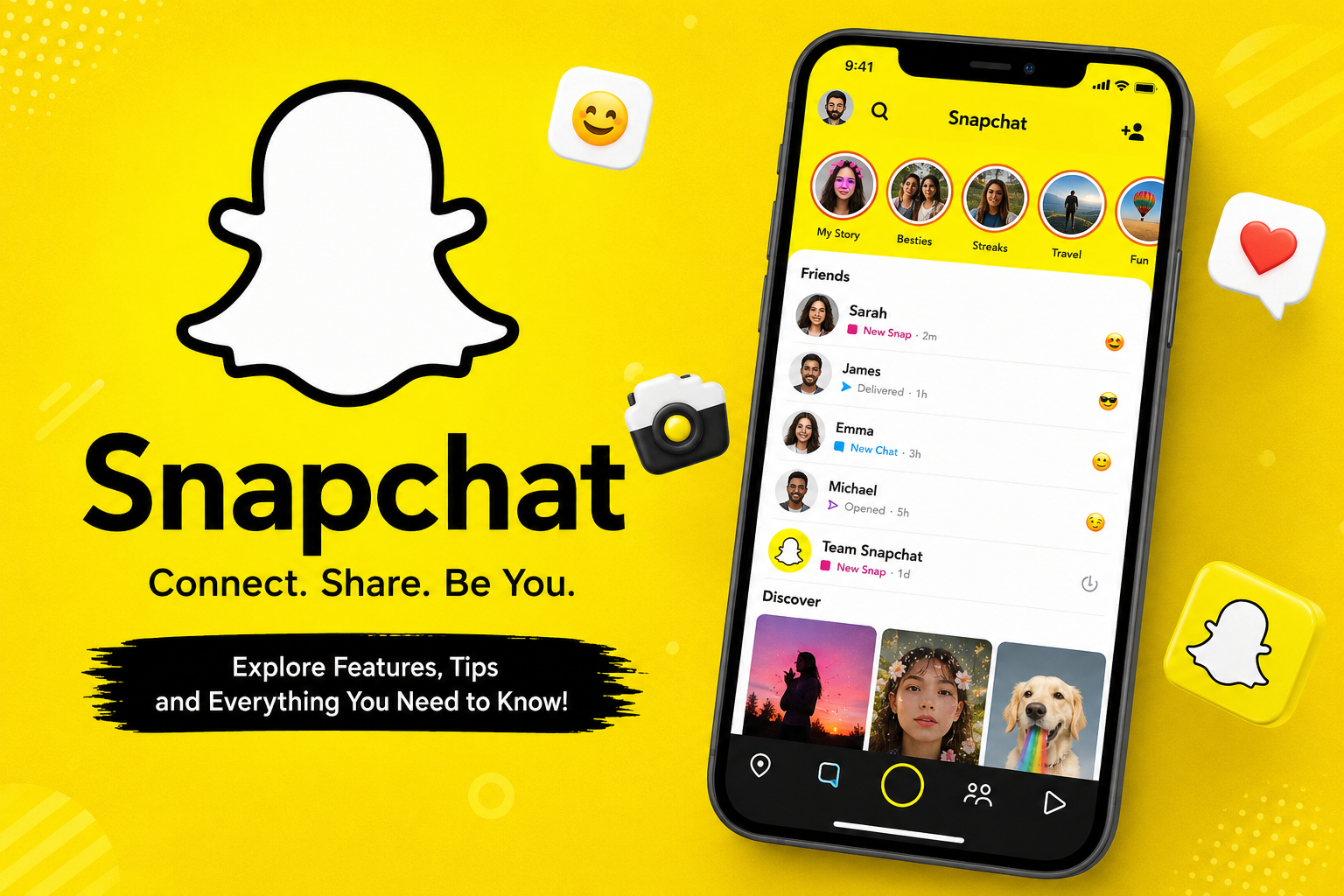
Snapchat Explained: Features, History & How It Works
Introduction
Snapchat remains one of the most recognizable social platforms in the world because it changed how people communicate online. Instead of focusing on permanent posts, Snapchat introduced fast, visual conversations built around disappearing photos and videos.
What began as a simple messaging app evolved into a camera-first social experience with Stories, augmented reality filters, private chats, maps, creators, subscriptions, and AI-powered features. Today, Snapchat continues to attract hundreds of millions of daily users worldwide and remains especially influential among younger audiences.
This guide explains what Snapchat is, how it works, its major features, privacy considerations, and why the platform continues to stay relevant.
What Is Snapchat?
Snapchat is a multimedia messaging and social networking application that allows users to send photos, videos, messages, and interactive content that are often designed to disappear after being viewed. The platform is known for camera-based communication, augmented reality lenses, Stories, private messaging, and social interaction built around real-time sharing.
The Story Behind Snapchat
Snapchat launched in 2011 with a simple idea: conversations online do not always need to last forever.
Unlike traditional social media platforms that encouraged permanent profiles and public content, Snapchat focused on temporary communication. Users could send quick photos or short videos without creating a permanent feed.
Over time, Snapchat introduced several influential features that later shaped the entire social media industry.
Major milestones include:
- Launch of disappearing photo messaging
- Introduction of Stories format in 2013
- Expansion into augmented reality camera experiences
- Integration of Bitmoji avatars after acquisition
- Development of creator tools and subscriptions
- Growth into AI and wearable technology initiatives
Today, Snapchat continues evolving beyond messaging into a broader digital communication platform.
Core Snapchat Features
Camera-First Experience
Unlike most social networks that open on a feed, Snapchat opens directly to the camera.
Users can instantly:
- Capture photos
- Record videos
- Add text and stickers
- Apply AR effects
- Share privately or publicly
This design encourages spontaneous communication instead of polished content creation.
Snaps
Snaps are individual photos or videos sent between users.
Users can:
- Send directly to friends
- Set viewing timers
- Add captions and drawings
- Save selected memories
Originally, Snapchat became popular because Snaps disappeared after viewing, although some content may remain stored depending on settings and account actions.
Stories
Stories allow users to publish photos and videos visible for up to 24 hours.
Different Story formats include:
- Personal Stories
- Private Stories
- Shared Stories
- Public Stories
Stories became one of Snapchat’s most influential innovations and later inspired similar features across multiple social platforms.
Chat and Messaging
Snapchat messaging combines text with visual communication.
Users can:
- Send disappearing messages
- Share voice notes
- Start video calls
- React with emojis
- Save selected messages
The focus remains on lightweight conversations rather than permanent chat histories.
Snapchat Features That Stand Out
AR Lenses and Filters
Snapchat helped popularize augmented reality for everyday users.
Lenses can:
- Transform faces
- Add animations
- Create interactive effects
- Place virtual objects into real environments
Snap continues investing heavily in AR technology and wearable experiences.
Snap Map
Snap Map lets users:
- Share locations with friends
- Explore public Stories
- Discover events
- View activity around locations
Location sharing can be customized, including Ghost Mode for privacy.
Memories
Memories acts as Snapchat’s built-in archive.
Users can:
- Save favorite Snaps
- Organize media
- Repost older content
- Store personal collections
This feature expanded Snapchat beyond fully disappearing communication.
Bitmoji Integration
Bitmoji became one of Snapchat’s signature experiences.
Users create personalized avatars that appear in chats, stickers, Stories, and profiles.
In 2026, Snap announced that the standalone Bitmoji application would be retired, with all avatar functionality moving directly into Snapchat. Billions of Bitmoji avatars have been created globally.
Snapchat Plus and Premium Features
Snapchat introduced a subscription offering called Snapchat+.
Premium features may include:
- Custom app icons
- Chat personalization
- Experimental tools
- Priority support
- Additional profile customization
Subscriber growth has become an important business area for Snap, with subscriptions surpassing 25 million users.
Privacy and Safety on Snapchat
One reason Snapchat became popular was the idea of temporary communication.
However, disappearing content does not always mean complete deletion.
Users should understand:
Screenshot Notifications
Snapchat often alerts users when someone screenshots certain content.
Family Center
Snapchat introduced expanded parental controls and family tools to provide visibility into teen activity and screen habits while maintaining privacy boundaries.
Account Controls
Users can manage:
- Friend permissions
- Story visibility
- Location access
- Contact syncing
- Data downloads
Understanding these settings helps create a safer experience.
Why Snapchat Still Matters in 2026
Snapchat remains competitive despite strong pressure from other social platforms.
Recent data shows:
- Hundreds of millions of people use Snapchat daily
- Monthly active users are approaching one billion globally
- User growth continues year over year
Its strength comes from offering communication that feels more private, immediate, and visual compared with feed-based social networks.
Rather than replacing traditional social media, Snapchat occupies a different role focused on close relationships and everyday sharing.
Frequently Asked Questions
Q: Is Snapchat free to use?
A: Yes. Snapchat is free to download and use. Optional premium experiences, including Snapchat+, offer extra customization and experimental features.
Q: Does Snapchat delete messages automatically?
A: Many messages disappear after viewing depending on chat settings, but users can save selected messages and Snapchat may retain certain data under specific conditions.
Q: What is the difference between Snapchat and Instagram?
A: Snapchat focuses more on private sharing, camera interactions, and disappearing communication, while Instagram emphasizes feeds, public content, and creator discovery.
Q: Can people see if you screenshot a Snap?
A: In many cases, Snapchat notifies users when screenshots are taken, especially for direct Snaps and some private interactions.
Q: Is Snapchat safe for teenagers?
A: Snapchat includes privacy controls and parental supervision features such as Family Center, but safe usage still depends on account settings and responsible communication.
Q: What happened to the Bitmoji app?
A: Snap announced the standalone Bitmoji app would be discontinued, with avatar creation and management moving fully into Snapchat.
Conclusion
Snapchat transformed social communication by making conversations faster, more visual, and less permanent. Its influence extends far beyond disappearing photos—introducing formats and experiences that reshaped modern social media.
Today, Snapchat combines messaging, Stories, augmented reality, location features, avatars, subscriptions, and privacy tools into a single ecosystem. While competition continues to grow, the platform remains relevant because it serves a different purpose: helping people connect in ways that feel immediate and personal.
For users who prefer visual communication over curated feeds, Snapchat still offers a distinct experience in 2026.





One Comment