India and Pakistan: The Shadow of Conflict and the Hope for Peace
 The relationship between India and Pakistan has once again become a major topic of global discussion due to increasing military tensions, political disagreements, and security concerns along the border regions. As both countries continue to strengthen their defense systems, people across South Asia fear that even a small clash could create serious consequences for regional peace and stability.
A History of Rivalry
India and Pakistan have shared a complicated relationship since their independence in 1947. The two neighboring nations have fought several wars and faced multiple border confrontations, mainly over the Kashmir issue and regional security concerns. Although there have been periods of peace talks and diplomatic cooperation, mistrust between both sides has remained strong.
Today, modern technology, advanced weapons, and social media propaganda have made tensions even more sensitive than before.
Recent Developments
In 2026, military activities and political statements from both countries have increased international concern. Border monitoring has become stricter, and both governments continue to focus heavily on national security. News reports and analysts suggest that the situation remains delicate, with the possibility of escalation if diplomatic efforts fail.
Citizens on both sides are also reacting emotionally, with patriotism growing stronger during times of tension. However, many peace activists, journalists, and international organizations are urging leaders to avoid conflict and focus on dialogue instead.
Impact on Ordinary People
Whenever tensions rise between India and Pakistan, the biggest impact is often felt by ordinary citizens. Businesses suffer, tourism declines, investors become cautious, and families living near border areas face fear and uncertainty.
A large-scale war between two nuclear powers could also affect global markets, international trade routes, and regional stability throughout Asia. Experts warn that peace is not only important for India and Pakistan, but for the entire world.
The Role of Diplomacy
Diplomatic communication remains one of the most important tools to reduce tensions. Many international leaders believe that negotiations, back-channel talks, and regional cooperation can help prevent misunderstandings and military escalation.
Young people in both countries are also increasingly using social media platforms to promote peace, unity, and cultural understanding rather than hatred and division.
Peace Over War
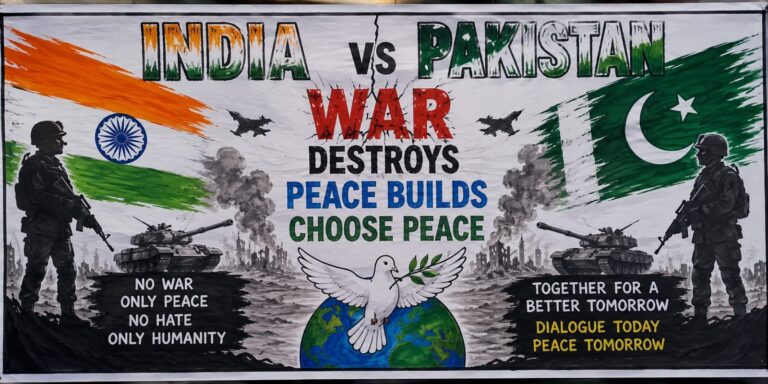
War may create destruction, economic loss, and human suffering, while peace creates opportunities for growth, education, technology, and prosperity. Millions of people in India and Pakistan dream of a future where borders become symbols of cooperation instead of conflict.
The world continues to watch closely, hoping that wisdom, patience, and diplomacy will guide both nations toward stability rather than war.
Conclusion
The current India-Pakistan tensions remind the world how fragile peace can be in South Asia. While political disagreements and military preparations continue, there is still hope that dialogue and responsible leadership can prevent a larger conflict. The future of the region depends not only on military strength, but also on the ability of both nations to choose peace over destruction.