Binance Crypto Trading: A Complete Beginner’s Guide to Crypto Trading
Introduction
Binance crypto trading has become one of the most popular ways for people to buy and sell cryptocurrencies. As one of the world’s largest cryptocurrency exchanges by trading volume, Binance offers access to hundreds of digital assets, multiple trading tools, and educational resources for both beginners and experienced traders. Whether you’re interested in buying Bitcoin, trading Ethereum, or exploring altcoins, understanding how Binance trading works is essential before placing your first order.
In this guide, you’ll learn what Binance crypto trading is, how different trading methods work, the most common order types, trading fees, security best practices, and practical risk management tips that can help you make more informed decisions.
What Is Binance Trading?
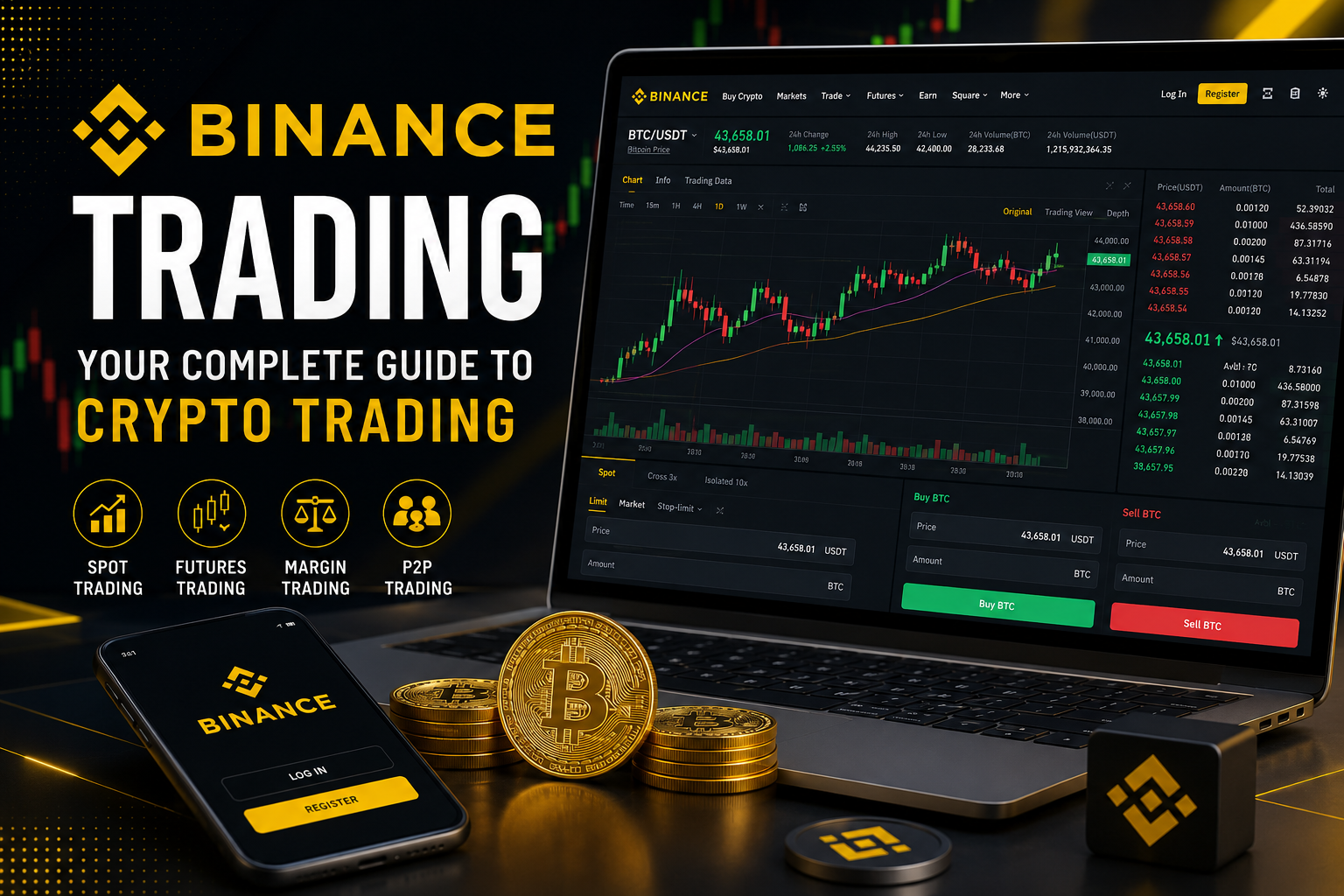
Binance trading is the process of buying and selling cryptocurrencies through the Binance exchange using various trading methods such as spot trading, margin trading, futures trading, and peer-to-peer (P2P) trading. The platform provides advanced charting tools, multiple order types, and access to hundreds of crypto trading pairs. (Binance Academy)
What Is Binance Trading?
Binance trading refers to executing cryptocurrency transactions on the Binance platform. Users can exchange digital assets such as Bitcoin (BTC), Ethereum (ETH), Solana (SOL), BNB, XRP, and many others.
The platform supports traders with different experience levels by offering:
- Spot trading
- Binance Convert
- Margin trading
- Futures trading
- P2P trading
- Trading bots (where available)
- Advanced charting tools
- Mobile and desktop trading
Binance also provides educational materials through Binance Academy to help users understand cryptocurrency markets before trading. (Binance Academy)
Types of Binance Trading
Spot Trading
Spot trading is the simplest and most beginner-friendly form of Binance trading.
When you purchase cryptocurrency through the spot market, you own the actual asset immediately after the trade is completed.
Best for
- Beginners
- Long-term investors
- Swing traders
Advantages
- No leverage
- Lower risk than derivatives
- Simple buying and selling process
Spot trading is generally considered the most suitable starting point for new users because it does not involve borrowing funds or leverage. (Binance Academy)
Margin Trading
Margin trading allows users to borrow funds to increase the size of their positions.
While leverage can amplify profits, it can also significantly increase losses.
Key characteristics include:
- Borrowed capital
- Higher potential returns
- Higher liquidation risk
- Suitable only for experienced traders
Futures Trading
Binance Futures allows traders to speculate on cryptocurrency price movements without owning the underlying asset.
Features include:
- Long positions
- Short positions
- Leverage
- Perpetual contracts
Because leverage magnifies both gains and losses, futures trading carries substantially greater risk than spot trading. (Binance Academy)
Binance P2P Trading
Peer-to-Peer (P2P) trading enables users to buy and sell cryptocurrencies directly with other users.
Common payment methods vary by country and may include:
- Bank transfers
- Mobile payment services
- Local payment options
Binance acts as an escrow service to help protect both buyers and sellers during transactions. (Binance Academy)
How Binance Trading Works
A typical Binance trading process includes:
1. Create an Account
Register using your email address or phone number.
2. Complete Identity Verification
Many regions require Know Your Customer (KYC) verification before accessing certain services.
3. Secure Your Account
Enable:
- Two-factor authentication (2FA)
- Anti-phishing code
- Withdrawal whitelist (where available)
4. Deposit Funds
Users can fund their accounts through supported methods, which vary by country, or transfer cryptocurrency into their Binance wallet. (Binance Academy)
5. Choose a Trading Pair
Examples include:
- BTC/USDT
- ETH/USDT
- BNB/USDT
6. Place an Order
Choose your preferred order type and submit the trade.
Binance Order Types
Understanding order types is essential for successful trading.
Market Order
Executes immediately at the current market price.
Best when:
- Speed matters
- Market liquidity is high
Limit Order
Allows traders to specify the exact price they want to buy or sell.
Useful when:
- Waiting for better entry prices
- Planning exits
Stop-Limit Order
Triggers a limit order after the market reaches a specified stop price.
Often used for:
- Managing risk
- Protecting profits
OCO (One-Cancels-the-Other)
Combines:
- Take-profit order
- Stop-loss order
When one order executes, the other is automatically canceled.
Binance Trading Fees
Binance charges trading fees that vary based on several factors, including:
- Trading volume
- VIP level
- Asset being traded
- Whether fees are paid using eligible discounts where available
Additional fees may apply for deposits or withdrawals depending on the cryptocurrency or payment method. Always review the latest fee schedule before trading because fees can change over time. (Coin Bureau)
Risk Management Tips
Successful traders focus as much on managing risk as on finding opportunities.
Some widely recommended practices include:
- Never invest more than you can afford to lose.
- Use stop-loss orders where appropriate.
- Avoid excessive leverage.
- Diversify your holdings instead of concentrating everything in one asset.
- Keep emotions out of trading decisions.
- Continue learning about market behavior and technical analysis.
Risk management is particularly important because cryptocurrency markets are known for high volatility. (Binance Academy)
Security Best Practices
Protecting your account should be a priority.
Consider the following:
Enable Two-Factor Authentication
This adds another layer of security beyond your password.
Use Strong Passwords
Avoid reusing passwords from other websites.
Beware of Phishing
Only access Binance through its official website or mobile application.
Monitor Account Activity
Review login history and withdrawal activity regularly.
Binance has also stated that it invests heavily in compliance and AI-powered systems to detect fraud and improve platform security. (The Economic Times)
Advantages of Binance Trading
Some of the platform’s major strengths include:
- Large selection of cryptocurrencies
- High market liquidity
- Multiple trading options
- Advanced charting tools
- Educational resources
- Mobile and desktop support
- Global user base
Potential Risks
Despite its popularity, Binance trading involves risks.
These include:
- Cryptocurrency price volatility
- Regulatory changes in different countries
- Leverage-related losses
- Cybersecurity threats if users neglect account protection
- Market uncertainty
Recent years have also seen increased regulatory scrutiny of Binance in several jurisdictions, highlighting the importance of understanding local laws before using any cryptocurrency platform. (The Wall Street Journal)
Frequently Asked Questions
Q: Is Binance trading suitable for beginners?
A: Yes. Beginners generally start with spot trading because it involves buying and owning cryptocurrencies directly without leverage. Binance also provides educational resources that explain trading basics and platform features. (Binance Academy)
Q: What is the safest type of Binance trading?
A: Spot trading is generally considered less risky than margin or futures trading because it does not require borrowing funds or using leverage. However, all cryptocurrency trading carries market risk.
Q: Can I trade cryptocurrencies on my mobile phone?
A: Yes. Binance offers mobile applications for supported devices, allowing users to monitor markets, place trades, manage wallets, and access many of the platform’s core features.
Q: What is the difference between spot and futures trading?
A: Spot trading involves buying or selling the actual cryptocurrency. Futures trading involves contracts that track price movements without requiring ownership of the underlying asset and often includes leverage. (Binance Academy)
Q: Do I need identity verification before trading?
A: Identity verification requirements depend on your country, applicable regulations, and the Binance services you want to use. Many features require users to complete KYC verification. (Coin Bureau)
Q: Is cryptocurrency trading risky?
A: Yes. Cryptocurrency prices can change rapidly, and traders may lose part or all of their investment. Using sound risk management and understanding the products before trading are essential.
Conclusion
Binance trading offers access to one of the largest cryptocurrency marketplaces, with features ranging from beginner-friendly spot trading to advanced products like futures and margin trading. Understanding order types, trading fees, account security, and risk management can help traders navigate the platform more effectively. While Binance provides extensive tools and educational resources, cryptocurrency markets remain highly volatile and subject to changing regulations. Before trading, take time to learn how the platform works, start with products that match your experience level, and make decisions based on careful research rather than short-term market excitement.
One Comment